
Chandler Leighton has yet proven herself again, with her new release “Blood ≠ Water” arriving with the growth of an artist refusing to let pain stay silent. It is a song built around emotional honesty, self-examination, and the complicated reality of relationships that shape us but do not always save us. With its title challenging the idea that family and connection are automatically defined by loyalty, the track explores betrayal, healing, distance, and the search for identity beyond the expectations placed on us. “Blood ≠ Water” is not simply a breakup song or an emotional confession; it is a statement from an artist learning how to turn personal wounds into something universal.
Leighton started off the track’s emotional landscape as a continuation of “Waiting For You to Heal” and “Wasted Potential,” two tracks which immediately establishes the core themes of volume 1 of the project. “Waiting For You to Heal” captures the frustration of loving someone who is not ready or willing to change. The song sits in the uncomfortable space between compassion and exhaustion, where hope begins to compete with the need for survival instinct. Rather than presenting heartbreak as a simple loss, Chandler Leighton focuses on the slow realization that sometimes caring for someone means accepting that you cannot fix them.
“Wasted Potential” pushes that idea further, confronting the disappointment of seeing what could have been but never became reality. The track’s emotional weight comes from its sense of reflection, it is not just about anger, but about grieving possibilities. Chandler Leighton examines the gap between who someone appeared to be and who they ultimately became, making the song resonate with anyone who had looked back on a relationship, friendship, or dream and wondered why it fell short. Together, the singles act as a preview of the tracks’s larger mission: transforming emotional damage into clarity.

SOURCE: SPOTIFY
The meaning behind “Blood ≠ Water” matters because Chandler Leighton’s music has always existed in the space between vulnerability and strength. She represents a generation of artists who do not separate emotional openness from power. Instead, the rawness is power. This track speaks to listeners navigating complicated relationships, changing identities, and rebuilding after disappointment. Its significance comes from its refusal to romanticize pain. Leighton does not treat suffering as something beautiful simply because it is painful; she uses it as evidence of growth.
Sonically, “Blood ≠ Water” balances intensity with atmosphere. The production creates room for Chandler Leighton’s voice to carry the emotional weight of the track. The track feels cinematic, using layered textures and dynamic shifts to mirror the unpredictability of the feelings she explores. Moments of quiet reflection are built into heavier, more dramatic sections, allowing the music to follow the natural rise and fall of emotion rather than forcing everything into a traditional pop structure.
The vocals are the defining element of the song. Her delivery moves between controlled restraint and complete emotional release, making each lyric feel lived-in rather than performed. She has the strength to sound fragile without sounding powerless. When she pushes her voice, it feels like a breaking point; when she pulls back, the silence carries just as much meaning. That balance gives the track its genuine authenticity. The listener is not simply hearing someone describe pain; they are experiencing the emotional process alongside her.
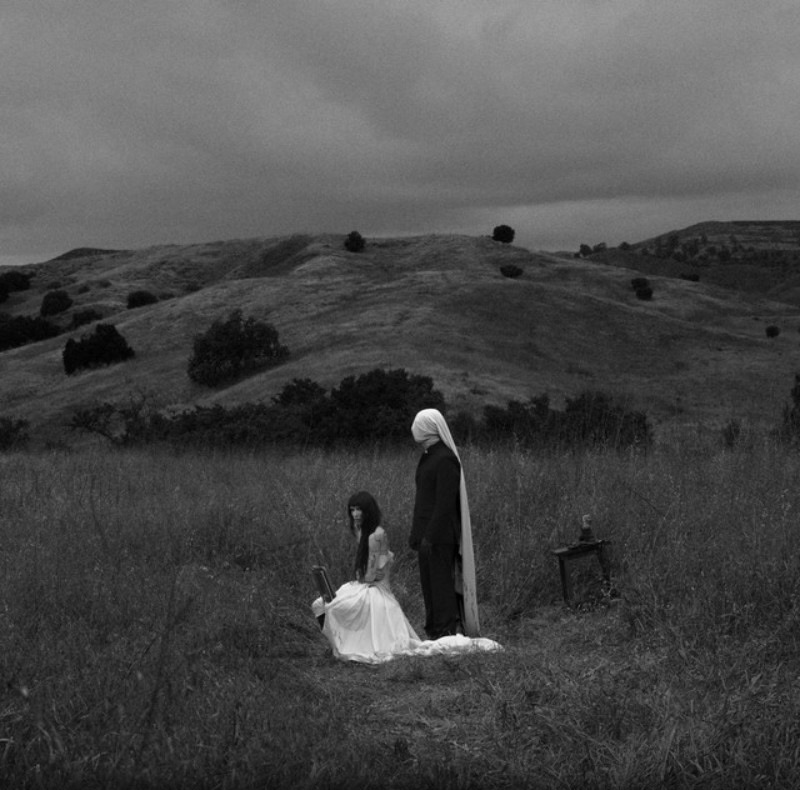
SOURCE: RILEZ MARTINEZ
The production also strengthens the track’s identity by avoiding a one-dimensional approach to heartbreak. Instead of relying only on stripped-down sadness, “Blood ≠ Water” intertwines moments of tension, energy, and release. The heavier sections reflect anger and frustration, while the softer movements reveal uncertainty and vulnerability. This contrast makes the record feel closer to real emotional experience, where healing is rarely a straight line.
What separates Chandler Leighton from many artists working in the emotional alternative-pop space is her ability to combine personal storytelling with broader emotional recognition. Her music is specific enough to feel intimate but open enough for listeners to place their own experiences inside them. The track’s identity comes from that balance: it is deeply personal without becoming inaccessible.
“Blood ≠ Water” itself is a reflective, wounded, and ultimately empowering song. It does not pretend that moving on is easy or that every relationship has a clean or perfect ending. Instead, it embraces the uncertainty of growth. The track understands that sometimes the hardest moments are not the ones when people leave, but the ones when you finally realize you have outgrown the version of yourself who stayed.
Overall, “Blood ≠ Water” establishes Chandler Leighton as an artist who turns emotional conflict into connection. The track’s greatest strength is its honesty: it does not chase perfection, it portrays transformation. From the emotional groundwork of “Waiting For You to Heal” to the reflective weight of “Wasted Potential,” Leighton proves that vulnerability can be a defining strength rather than a weakness. What sets her apart is her ability to make personal experiences feel collective, and where she is headed is toward a space where emotional storytelling, powerful vocals, and fearless self-awareness continue to define her voice. In a moment when listeners are searching for music that feels real, “Blood ≠ Water” matters because it does not just describe healing, it captures the messy, necessary process of becoming someone new.